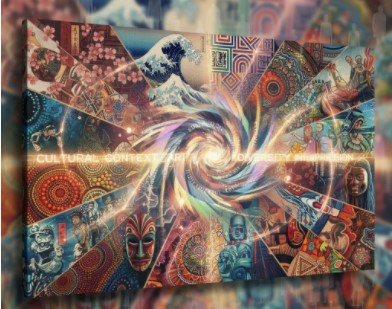
Cultural context in art and design profoundly shapes our understanding and appreciation of creativity. This blog discusses how the diversity of expression influenced by cultural backgrounds enriches the creative process. The blog discusses how cultural context affects art and design by highlighting the fact that diversity of expression is important and that cultural backgrounds can be used to inform creativity.
Connection of Culture and Art
Culture is the beliefs, values, and traditions and practices that define a given group of people. It is a prism, through which people perceive the surrounding world. Culture and art are symbiotic, although art mirrors the cultural values, art can alter and question cultural values.
1. Historical Context
Past history of a given culture largely affects the artistic manifestations. As an example, the Renaissance art in Europe was marked with the revival of classical themes and techniques as the culture shifted in the direction of humanism and individualism. By comparison, the Dada and Surrealism movements of art were a reaction to the chaos of World War I, and they demonstrate how historical occurrences may influence the artistic expression.
2. Symbolism and Meaning
Symbols and motifs that are utilized in art are usually culturally based. Various cultures consist of distinct symbols, which have a certain meaning. Considering an illustration, the lotus flower is a potent icon in most of the Asian cultures and signifies enlightenment and purity. Patterns and colors in African art may have a message regarding social status, spirituality, or community membership. Such symbols are critical in proper interpretation of works of art of different cultures.
3. Techniques and Materials
The techniques and materials applied in art and design are also influenced by culture. The cultures of the indigenous people tend to use locally available materials and traditional practices that have been passed on across generations. Indicatively, Native Americans artists can apply natural dyes and other natural materials in textile production whereas Japanese craftsmen are regarded as masters of traditional ceramics and woodwork. These options demonstrate a strong association with cultural background and the place.
The Diversity in Art and Design
Art and design diversity adds to the complexity of human experience and this offers a wider view of creativity. Diversity supports artistic expression in the following ways:
1. Cross-Cultural Influences
Several decades ago, cross-cultural interactions were less common than they are nowadays in the globalized world. Designers and artists always get inspired by other cultures, combining styles and methods to produce new pieces of art. As an illustration, one can consider a current design, in which minimalistic Japanese values are mixed with loud western colors and shapes. This intertwining of effects encourages innovativeness and brings about cultural discourse.
2. Correspondence and Personality
Art and design are very important platforms of representation and identity. Those excluded can tell their stories through creative expression, critiquing mainstream cultural stories. An example is that today artists of various backgrounds can utilize their art to discuss the problem of race, gender, and social justice and give voice to communities that are underexpressed. This image is essential in promoting empathy and sense in a world that has become highly connected.
3. Innovation and Problem Solving
Diversity creates new techniques in design and problem solving. Working together, people of different cultural backgrounds present different perspectives and ways of doing things. Such diversity of thinking can bring more productive and innovative results to the design processes. An example is product design, where knowledge of cultures may lead to products that are easier to use and more culturally aware, which will lead to better user experience.
Cultural Appropriation Problems
Though the cultural borrowing may be an enriching experience, it is necessary to navigate the complications of cultural appropriation. Cultural appropriation is the use of aspects of a certain culture by people of a different culture, who usually do not seek permission and or even know. It has the potential of commodifying cultural symbols and practices and depriving them of their original meaning and significance.
1. Recognizing Ownership
It is important to honor the property of cultural expressions during the making of the creative. The artists and designers must be sensitive to other cultures, and they should strive to learn the context and meaning of the elements they want to integrate in their designs. Working with people who represent the culture, which is being discussed, may assist in making sure that it is authentic and respectful.
2. Educating and Advocating
To prevent appropriation, one should learn about the cultural backgrounds and practices. Artists and designers should also make efforts to acquire the knowledge about the societies that they are inspired by, to provide a voice and a point of view to the society. This dedication to education creates respect and understanding between each other, and this diversifies the creative sphere.
Conclusion
The influence of cultural context on art and design is significant and it affects the way we make, perceive and enjoy artistic expression. This awareness of the numerous influences of cultures would help to make the artistic environment more open and rich. The understanding of the importance of cultural context does not only make us appreciate art, but also fosters dialogue, empathy, and creativity in the creative process. Living in a world that has become more interconnected than ever, toleration of diversity in expression would be a necessary element to the further development of art and design.
FAQs
Q: What is the role of culture in art?
A: The cultural context influences the themes, symbols and techniques employed in art, what beliefs and values a group of people have and affect the way the art will be interpreted by the audience.
Q: What is cultural appropriation in art and design?
A: Cultural appropriation is a situation whereby the elements of a given culture are applied by people of a related culture without their authorization and in most cases, it leads to commodification and misrepresentation of the practices of cultures.
Q: What is the value of diversity in art and design?
A: Diversity leads to enrichment of the artistic expression through combination of different perspectives, resulting in innovation and enabling those who are underrepresented to express their stories resulting in an increase in empathy and comprehension in the society.